Maggot Debridement Therapy (MDT)
Advanced Biological Wound Cleaning for Faster Healing
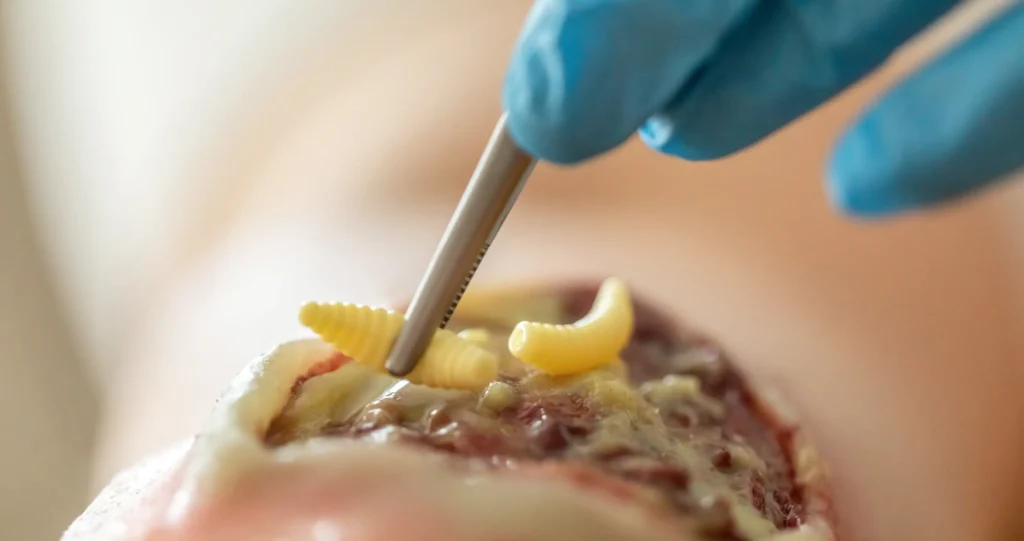
Maggot Debridement Therapy (MDT), also known as Larvae Therapy, is an advanced wound care treatment that uses sterile medical-grade larvae to remove dead tissue, control infection, and stimulate wound healing. At MediAsia Advance Wound Dressing & Tissue Repair Center, we are among the pioneers of MDT in Northern Malaysia, offering this evidence-based treatment for patients with chronic and non-healing wounds.
Key Aspects of Maggot Debridement Therapy (MDT)
Maggot Therapy is a scientifically proven treatment used worldwide for complex wounds that have not responded well to conventional methods. It offers a safe and effective alternative for selected patients requiring advanced wound management.
Selective Removal of Dead Tissue
Medical-grade larvae remove only damaged and dead tissue while preserving healthy surrounding tissue, making wound cleaning highly effective and precise.
Infection Control
Larvae help reduce bacterial burden within the wound and can assist in managing wounds affected by resistant bacterial infections.
Stimulates Natural Healing
MDT promotes the formation of healthy granulation tissue and supports the body's natural healing process.
Limb Salvage Support
For patients with diabetic foot ulcers and complex chronic wounds, MDT can play an important role in preventing complications and preserving limbs.
A Proven Solution for Chronic Non-Healing Wounds
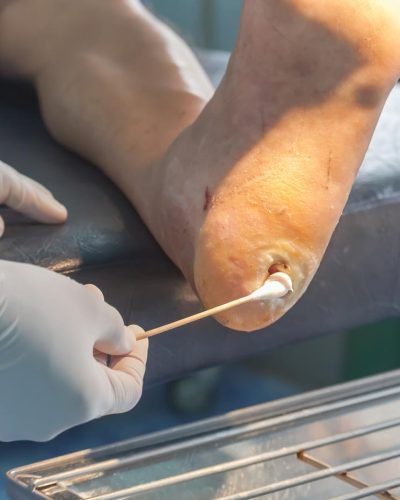
Many chronic wounds contain dead tissue that prevents proper healing and increases the risk of infection. Traditional wound cleaning methods may not always be sufficient, especially in complex diabetic foot ulcers, pressure injuries, and long-standing wounds.
Maggot Debridement Therapy utilizes sterile medical larvae that naturally break down and remove non-viable tissue while helping create an environment that supports healing. The treatment is carefully monitored by trained wound care professionals and is performed under strict clinical protocols.
At MediAsia, MDT is often considered for patients with diabetic foot ulcers, chronic wounds, infected wounds, pressure injuries, and wounds that have not responded adequately to conventional treatments. Our team evaluates each patient individually to determine whether MDT is an appropriate treatment option.
Through a combination of advanced wound care techniques and specialized expertise, MDT has helped many patients avoid further complications and move toward successful wound healing.
Many chronic wounds contain dead tissue that prevents proper healing and increases the risk of infection. Traditional wound cleaning methods may not always be sufficient, especially in complex diabetic foot ulcers, pressure injuries, and long-standing wounds.
Maggot Debridement Therapy utilizes sterile medical larvae that naturally break down and remove non-viable tissue while helping create an environment that supports healing. The treatment is carefully monitored by trained wound care professionals and is performed under strict clinical protocols.
At MediAsia, MDT is often considered for patients with diabetic foot ulcers, chronic wounds, infected wounds, pressure injuries, and wounds that have not responded adequately to conventional treatments. Our team evaluates each patient individually to determine whether MDT is an appropriate treatment option.
Through a combination of advanced wound care techniques and specialized expertise, MDT has helped many patients avoid further complications and move toward successful wound healing.
Maggot Debridement Therapy is a medical treatment that uses sterile laboratory-grown larvae to remove dead tissue, reduce bacterial contamination, and promote wound healing.
Yes. MDT uses specially prepared sterile medical-grade larvae under professional supervision and has been used successfully in wound care centers worldwide.
Most patients experience little or no discomfort during treatment. Individual experiences may vary depending on the wound condition.
MDT may be used for diabetic foot ulcers, chronic wounds, pressure injuries, infected wounds, and certain non-healing surgical wounds.