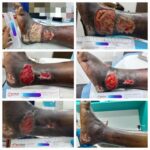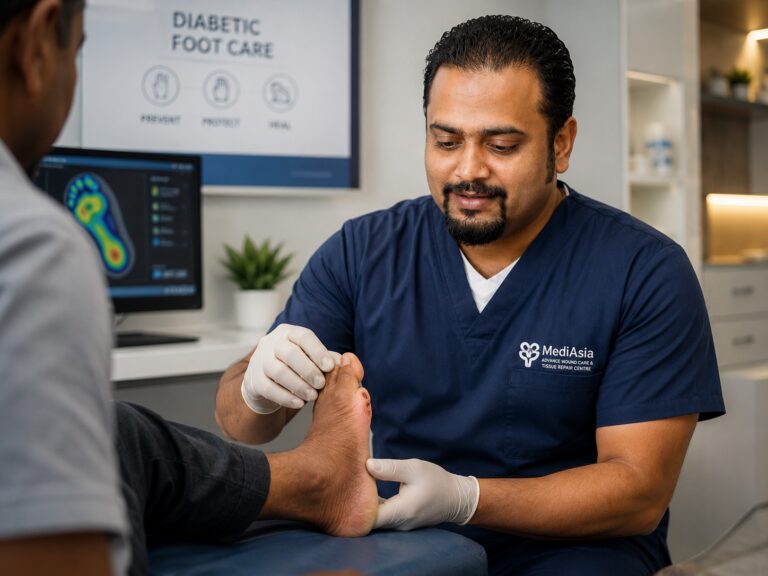

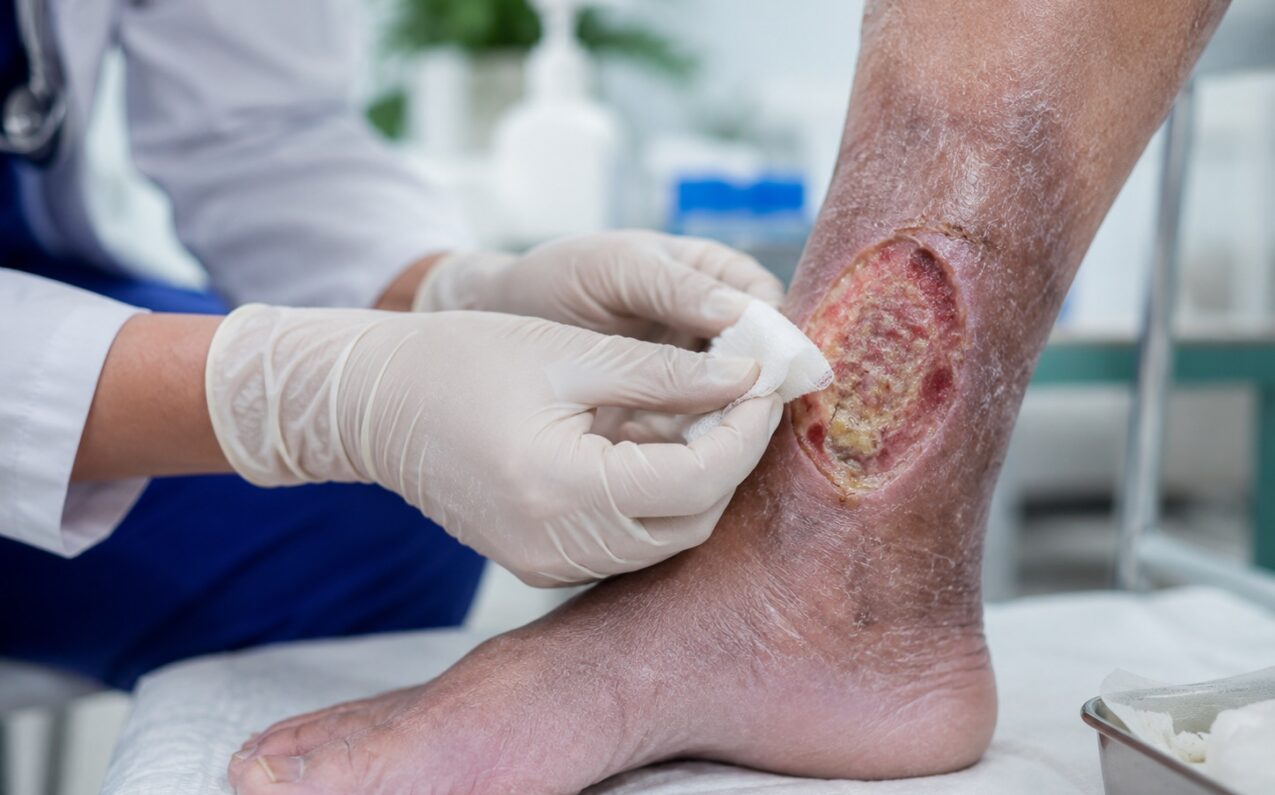
A wound that remains open or repeatedly breaks down should not simply be treated with endless dressing changes without asking a more important question:
Why is this wound not healing?
Wound healing is a complex biological process. When one or more factors interfere with that process, healing may become delayed.
1. Poor Blood Circulation
Healing tissue requires oxygen and nutrients delivered through the bloodstream.
When circulation is compromised, particularly in people with vascular disease or diabetes, wound healing may be affected.
2. Diabetes
Persistently elevated blood glucose can affect multiple processes involved in healing and is associated with complications involving nerves and blood vessels.
WHO highlights nerve damage and impaired blood flow as important contributors to diabetic foot problems and ulceration.
3. Infection
A wound may become infected, increasing tissue damage and interfering with healing.
Increasing redness, swelling, discharge, odour, fever or deterioration of the wound should prompt medical assessment.
4. Repeated Pressure
This is particularly important in diabetic foot ulcers and pressure injuries.
A clinician may provide excellent wound treatment, but if the affected area experiences damaging pressure every time the patient stands or walks, healing can remain difficult.
This is why offloading is such an important concept in diabetic foot management.
5. Dead or Unhealthy Tissue
Some wounds contain non-viable tissue that may interfere with assessment and healing.
Where clinically appropriate, debridement may form part of wound-bed management.
Treat the Patient, Not Only the Wound
Advanced wound management requires more than choosing a dressing.
The clinical team needs to understand:
Why did this wound develop?
What is preventing it from healing?
Is pressure contributing?
Is circulation adequate?
Is infection present?
What can be done to reduce recurrence?
This broader perspective is central to specialised wound care.
For selected complex wounds, specialist centres may also consider additional wound-management approaches based on clinical assessment and evidence—not as replacements for fundamental wound care, but as part of an appropriate overall treatment plan.
Authoritative resources: IWGDF wound-care and diabetic-foot guidance · NICE diabetic foot prevention and management guidance